2025 Fall Newsletter

During my 36 years in Early Childhood Education, I have seen trends in the field come and go. The importance of play for young children has never been emphasized more than today. The latest brain research supports the significance of play in developing neural pathways, enhancing cognitive function, emotional regulation, and social skills. Young children’s brains are different; they learn best through hands-on experience. During play, children engage in problem solving, decision making, and creative thinking. They are also continually creating connections to what they already know.

One of my favorite videos of my son, Wes, shows him playing outside at two years old with our neighbor’s cat. The cat was laying on the driveway, and Wes appears intensely focused while picking up dried leaves and arranging them on the cat’s belly. To an adult brain, this could look silly, or possibly even dangerous. However, through an early childhood education lens, we can see a great deal of learning going on. Wes was developing empathy for animals by watching the cat’s reaction. This was helping him understand boundaries and preferences, as well as cause and effect. Wes was also advancing his fine motor control and hand-eye coordination which are crucial pre-writing skills. Additionally, Wes was gaining a wide range of benefits simply from playing outdoors, including improved sensory integration, cognitive development, emotional resilience, motor skills, and an overall boost in mood.

Jonathan Haidt, author of The Anxious Generation, discusses how play-based childhoods, where children engaged in free play with minimal intervention from adults, largely disappeared after 2010. During that time, he argues, a “great rewiring of childhood” occurred, contributing to physical and mental health challenges for today’s children. One of Haidt’s key recommendations to counter what he calls “the mass destruction of human potential” is to give young children greater independence, more opportunities for free play, and real-world responsibilities. He emphasizes that we must reverse the pattern of overprotecting children in the real world and under protecting them online. According to Haidt, free play is one of the most “nutritious” things we can give a child.

At All Saints’, we understand that play is children’s work. Young learners are concrete thinkers who need hands-on experiences to connect new information to what they already know. They thrive when given autonomy and meaningful choices in their learning. Our teachers serve as guides, nurturing children’s curiosity while providing time and space for real world inquiry and problem solving. By integrating children’s interests and offering freedom within structure, we help children develop ownership of their learning and grow into lifelong learners. My prayer for our school family is that we can slow down and recognize the importance of play as foundational. Through rich play experiences, students gain the skills they need to confidently move into more abstract learning. We are not just getting children ready for kindergarten; we are preparing them for life.

Gigi Khalsa, Head of School

2025 Spring Newsletter

When my daughter Hazel was three years old, she went to the Nutcracker ballet for the first time. She fell in love. She was thrilled by the beautiful dancing, and a little scared by the Rat King causing her to hide under her seat. We enrolled her in classes at Ballet Austin. For three years, she attended classes and danced at home non-stop. Her dream was to be in the Nutcracker. When she was seven, the opportunity arrived. The word among the experienced ballet moms was that almost all the students at that level would be able to perform. The audition day came and went, and then we anxiously awaited the news of a possible part.

The anticipated email arrived while we were waiting for dinner at Threadgill’s. As I read it, I felt crushed, and my family asked what was happening. I should have thought about what to say and how to say it, but instead the cold, hard truth came out unvarnished. Hazel was the most disappointed of course. This is what she had been working for all these years, and I wasn’t sure how to comfort her and make her feel better. I wanted to take away all the pain of what probably felt like failure. She wanted to quit ballet. I convinced her to stick with it for the rest of the year, but she didn’t feel the same way, and when the end of the year came, and she still wanted to be done, we agreed to let her stop taking classes.

As parents, we have a strong desire to protect our children from disappointment and failure, but one of the biggest mistakes we can make is trying to control their lives so that they won’t have to face these challenges. Learning to handle adversity is an important life skill, and we increase their tolerance for frustration by helping them understand that making mistakes and failing are a natural part of learning. When children learn to have a growth mindset, they understand that challenges are normal and not a reflection of their worth. As parents, we can help by focusing on effort and resilience rather than outcomes.

I wish I had recognized at the time that when children make mistakes or fail at something it is important to help them process it. Because I didn’t want to cause more sadness, I didn’t fully validate Hazel’s feelings or ask her open-ended questions about what she was thinking and feeling. I did encourage her to be persistent by asking her to stay in the classes, but without fully processing her feelings.

One of the biggest lessons I’ve learned as a parent is to forgive myself. When I reflect on this experience, I recognize my own mistakes. Parenting is challenging, and it is easy to feel like a failure at times. My prayer for our school family is that as parents we can be mindful of our own reactions, model a growth mindset, and focus on effort rather than outcomes. Children become resilient by allowing them to experience challenging moments and setbacks, while at the same time validating their feelings and letting them know that we are there for them and will always love them unconditionally.

Gigi Khalsa, Head of School

2024 Fall Newsletter

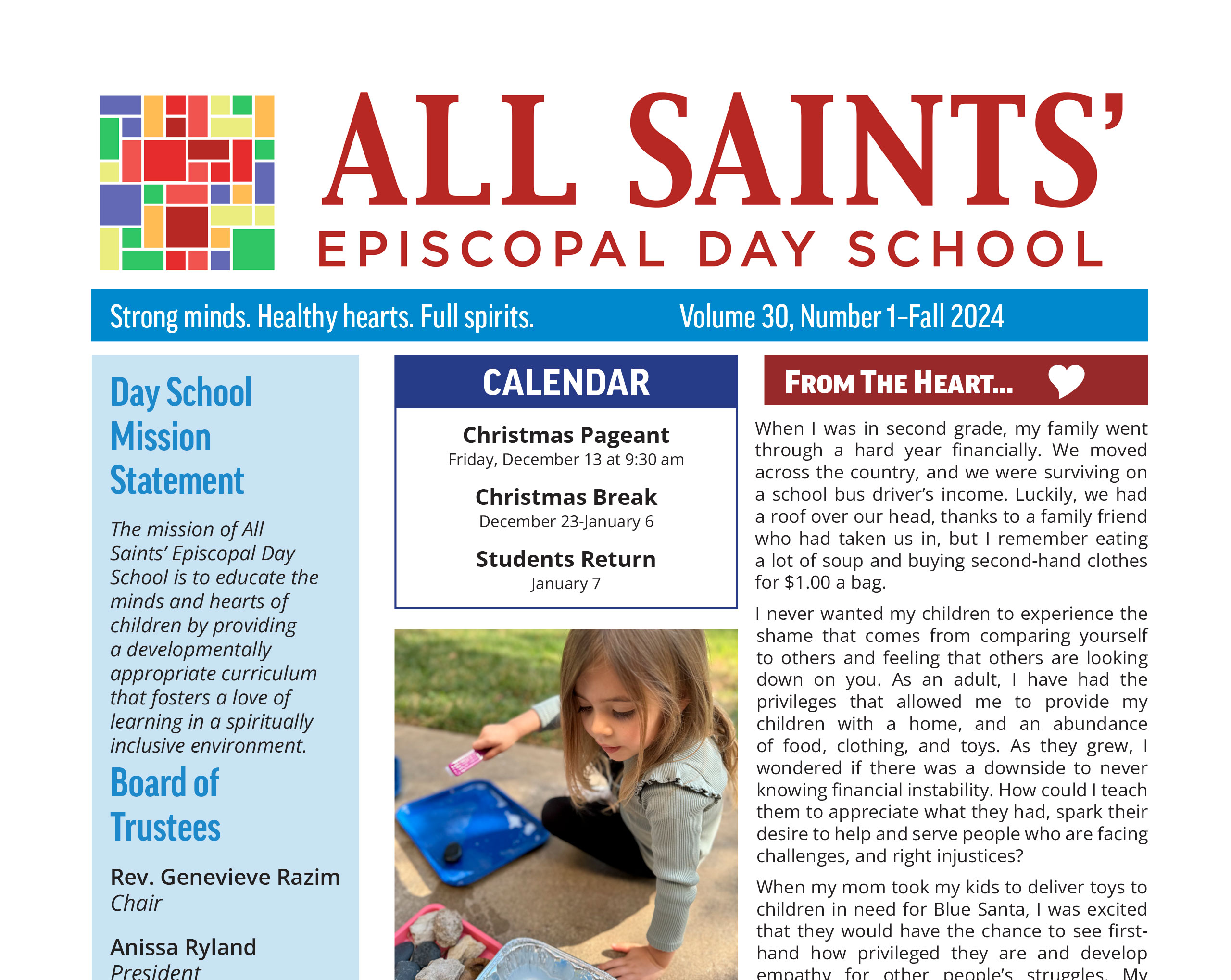
When I was in second grade, my family went through a hard year financially. We moved across the country, and we were surviving on a school bus driver’s income. Luckily, we had a roof over our head, thanks to a family friend who had taken us in, but I remember eating a lot of soup and buying second-hand clothes for $1.00 a bag.

I never wanted my children to experience the shame that comes from comparing yourself to others and feeling that others are looking down on you. As an adult, I have had the privileges that allowed me to provide my children with a home, and an abundance of food, clothing, and toys. As they grew, I wondered if there was a downside to never knowing financial instability. How could I teach them to appreciate what they had, spark their desire to help and serve people who are facing challenges, and right injustices?

When my mom took my kids to deliver toys to children in need for Blue Santa, I was excited that they would have the chance to see first- hand how privileged they are and develop empathy for other people’s struggles. My daughter came back wide eyed, telling me about a large family that lived in a small trailer and how happy and appreciative they were. The experience made an impression on her, and it became a tradition that my kids eagerly awaited, but I wanted more for them than once a year service.

Young children need multiple opportunities to be of service to others, to see empathy modeled, and be encouraged to reflect on what they are grateful for. Here are some of the ways I found to develop gratitude and empathy at home:

  • Practicing random acts of kindness and expressing appreciation when you see or receive acts of kindness
  • Giving your child age-appropriate chores, working together as a team, and giving specific feedback, for example, “You picked up all your Legos. That was helpful!”
  • Daily sharing at a meal about something each family member is grateful for
  • Finding ways as a family to help others through donations or time

The Day School has worked intentionally to provide children with regular service opportunities that help them understand how their life experiences may differ from others and the joy that comes from giving. The traditional service projects at our school have been expanded and a service-learning calendar was created. Teachers decided on the caring concepts that guide student discussions. Recommended books to support service learning in the classroom and in our homes are also included. My prayer for our school family is that we can be of service to others, and nurture gratitude in ourselves and in our children not only during the holiday season, but throughout the year.

Gigi Khalsa, Head of School

Outdoor Classroom Certification

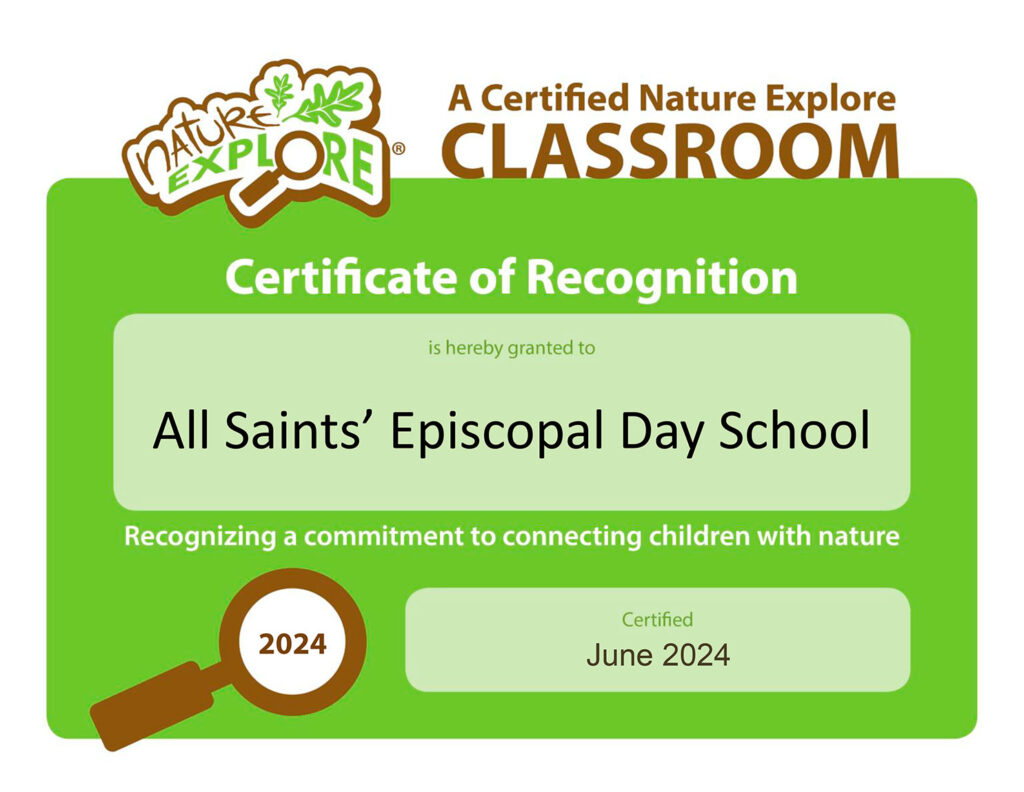
After several years of playground improvements, we are excited to announce that All Saints’ Episcopal Day School has received official certification from Nature Explore for our Outdoor Classroom. Nature Explore is leading a movement to bring the benefits of learning with nature to all children. We are delighted to meet their research-based requirements for outdoor classroom design and align perfectly with their mission to inspire joy and wonder in children, educators, and communities with a heart centered approach to early education.

The latest educational research shows the benefits of outdoor learning. When children play outside, they learn about STEM (science, technology, engineering, and math), develop social skills, create healthy habits of being physically active, and experience hands-on learning in the real world. Time outside leads to better learning outcomes in all domains. Being outdoors lets kids burn extra energy, increases blood flow to the brain and decreases stress. When they come inside, children are more attentive, focused, and on task. As an Episcopal school, we see an additional spiritual benefit, knowing that we are all a part of God’s Creation and loved by God. Not only do we learn to love and take care of the Earth by spending time in nature, but it also leads us to understand something greater than ourselves and helps us feel a deeper connection to God.

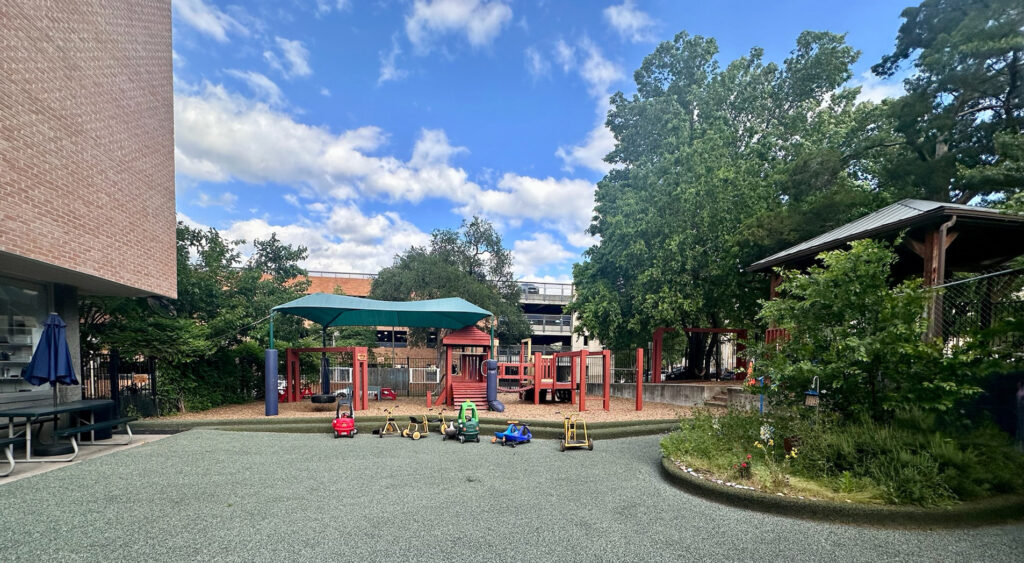
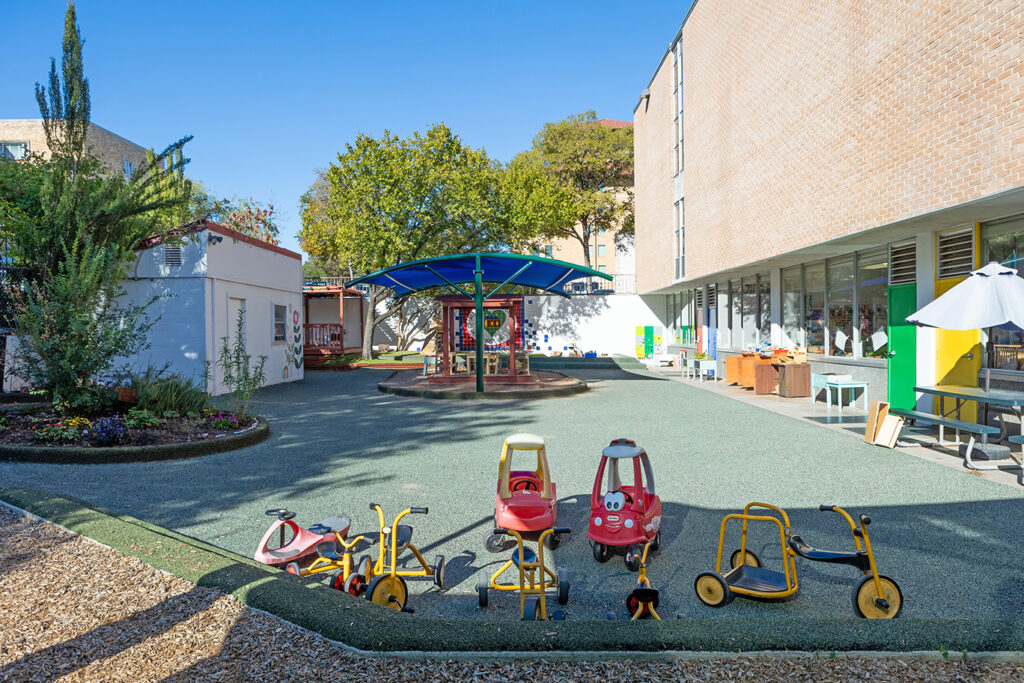
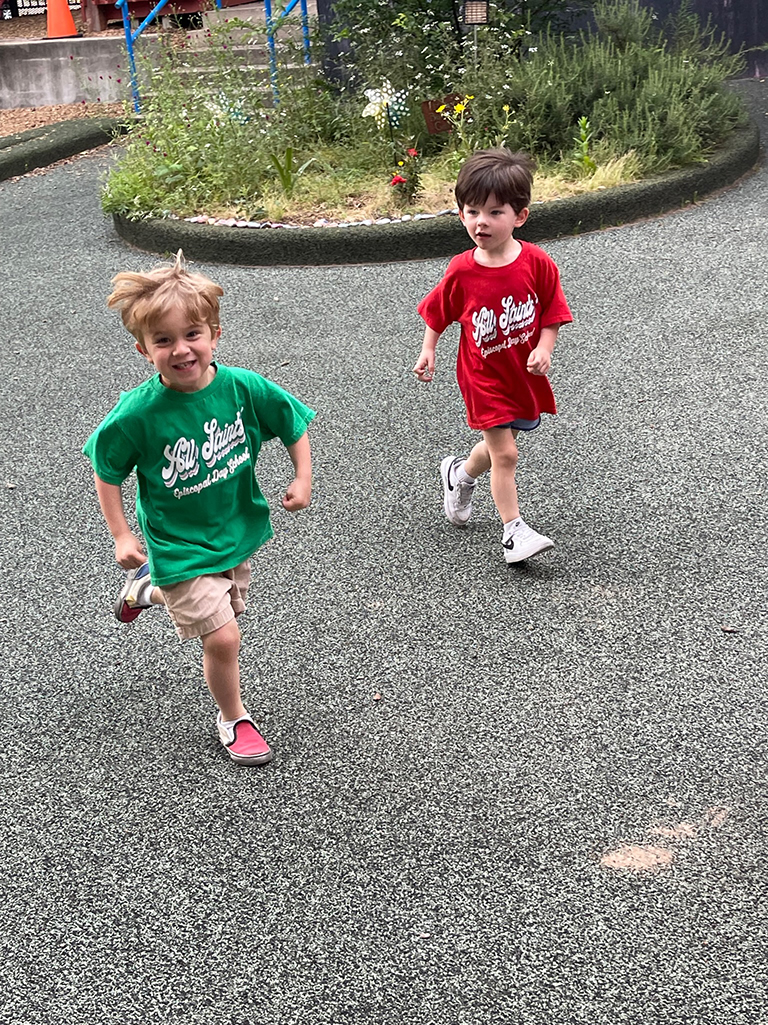
At All Saints’, outdoor play is known as essential to the healthy development of body, mind, and spirit. The design of our playground was intentionally improved to become the Outdoor Classroom. There are more than twelve distinct play areas where indoor learning materials are brought outside and used alongside natural materials, to encourage whole-child learning. These areas include:

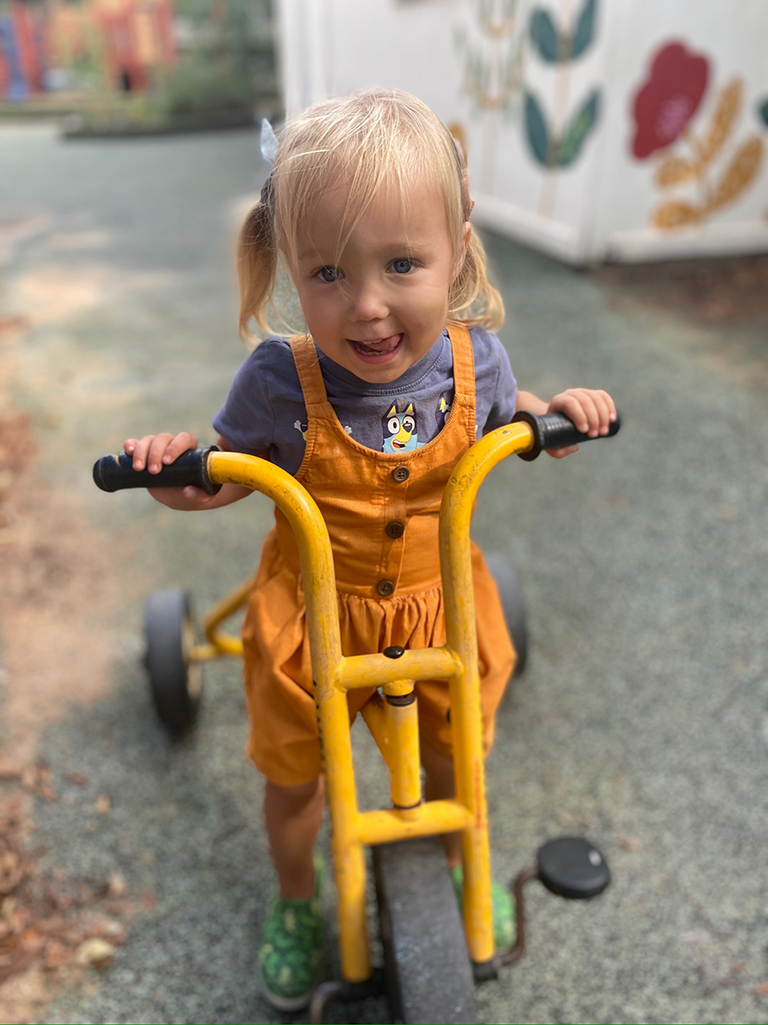
  • Action Area for large motor activities and wheeled toys – develops big muscles needed for physical development
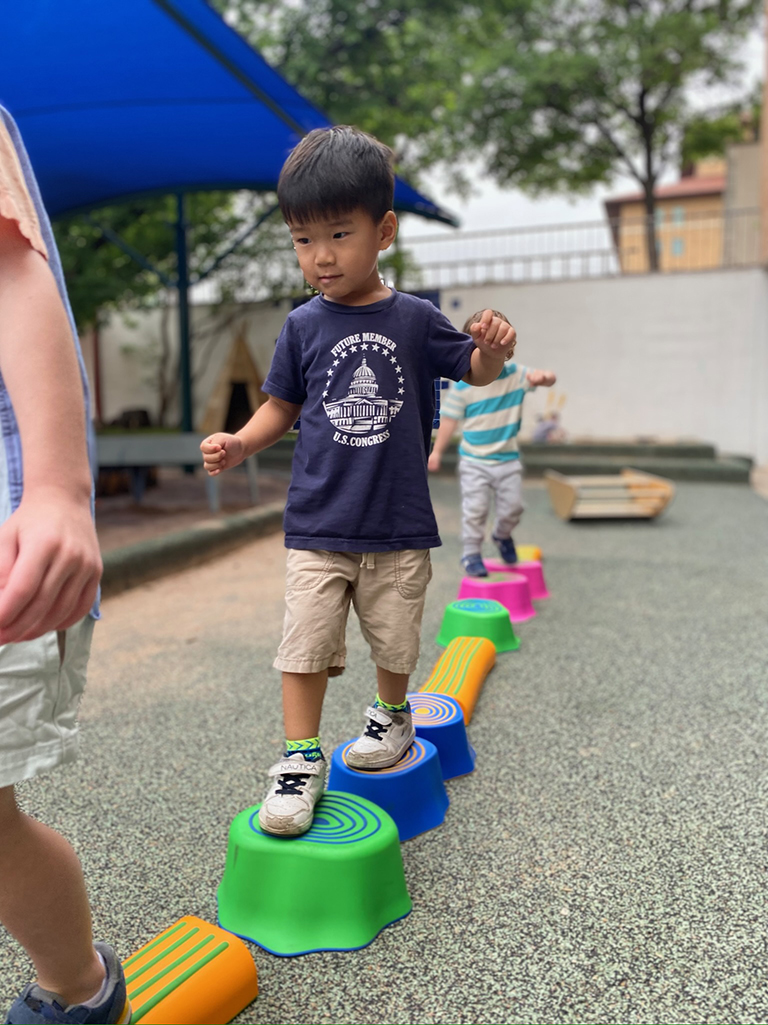
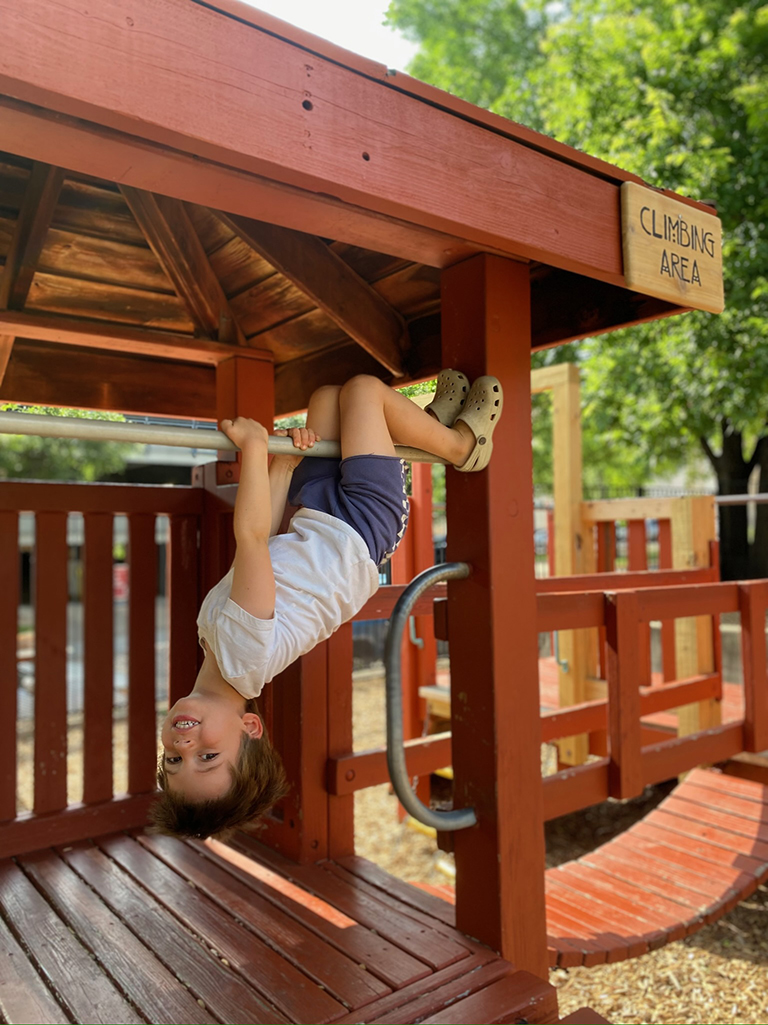
  • Climbing & Crawling Area including a bridge, monkey bars, a slide, and climbing wall support – improves gross motor skills and strengthens the vestibular system
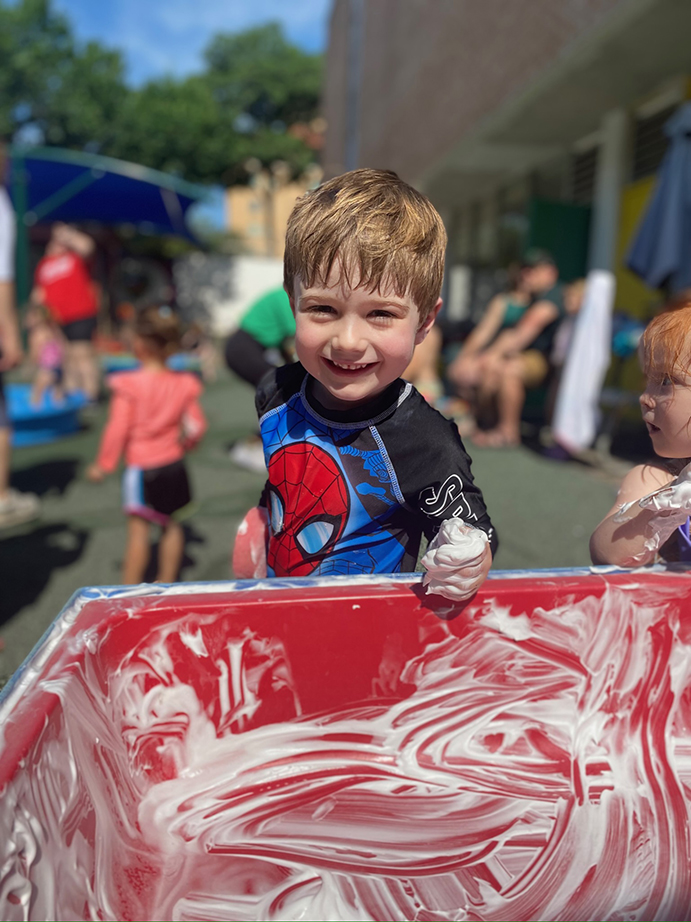
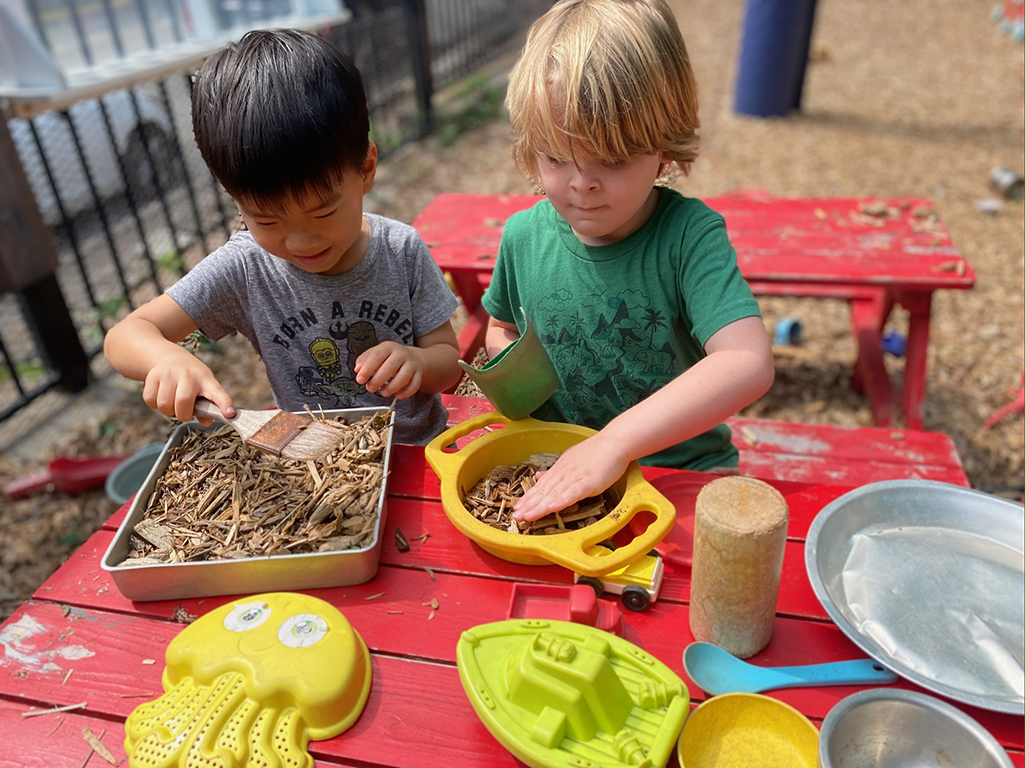
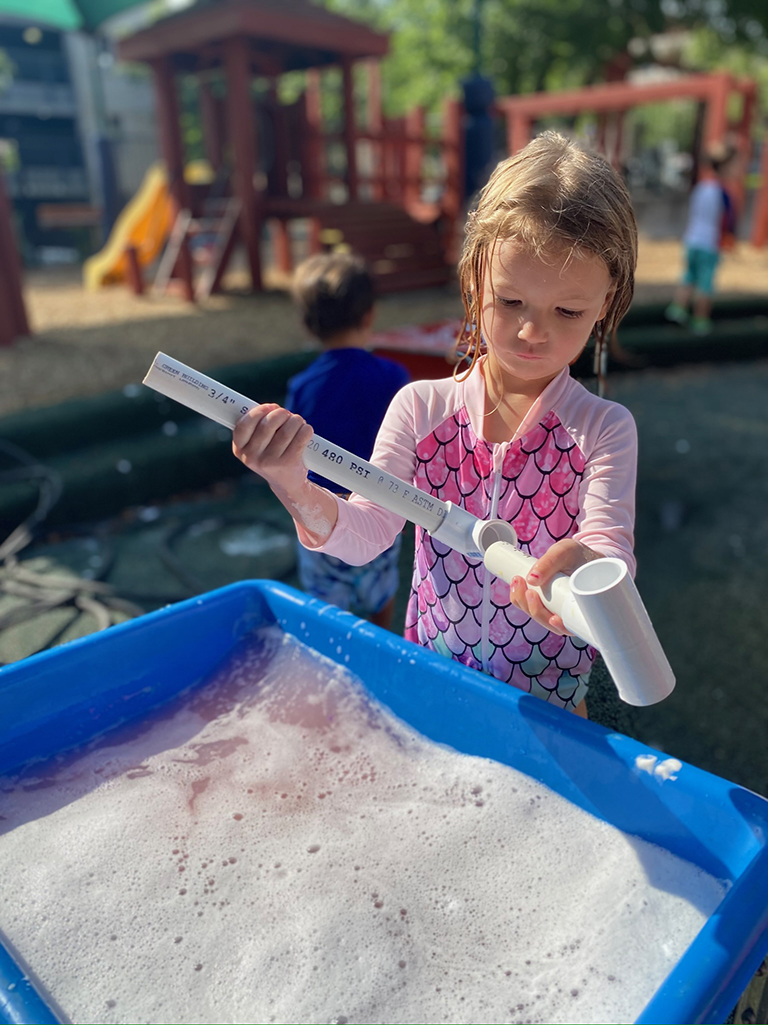
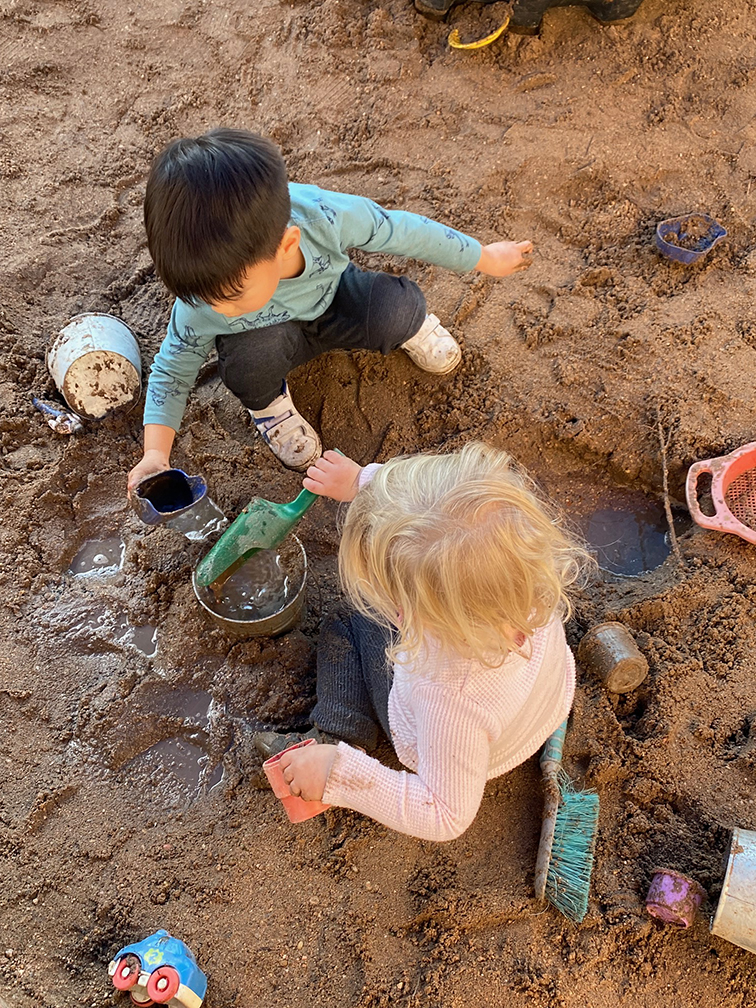
  • Messy Materials, Sand, and Water Areas – engages the senses, develops curiosity, and provides hands-on experimentation
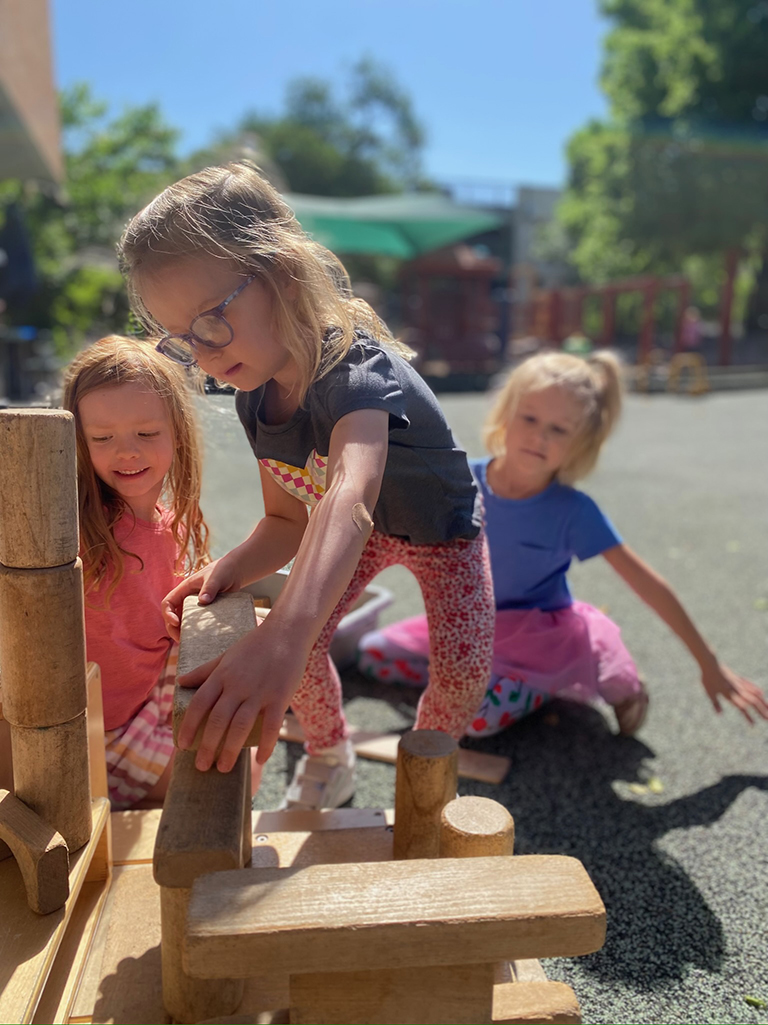
  • Building Area and Lego Wall – encourages critical thinking, problem solving, inquiry, and early science exploration through construction and engineering
  • Nature Art Area – develops creativity, visual-spatial processing, and fine motor skills
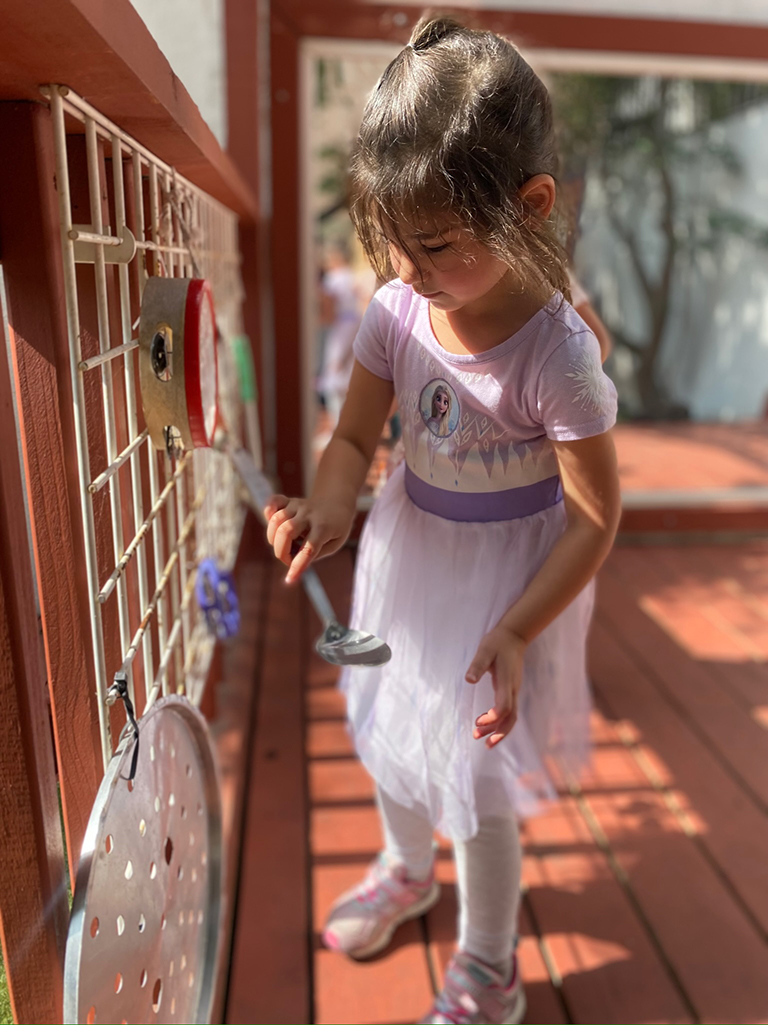
  • Music and Movement Area – encourages self-expression, language, and literacy through dramatic play including storytelling, singing, and exploring instruments and sounds
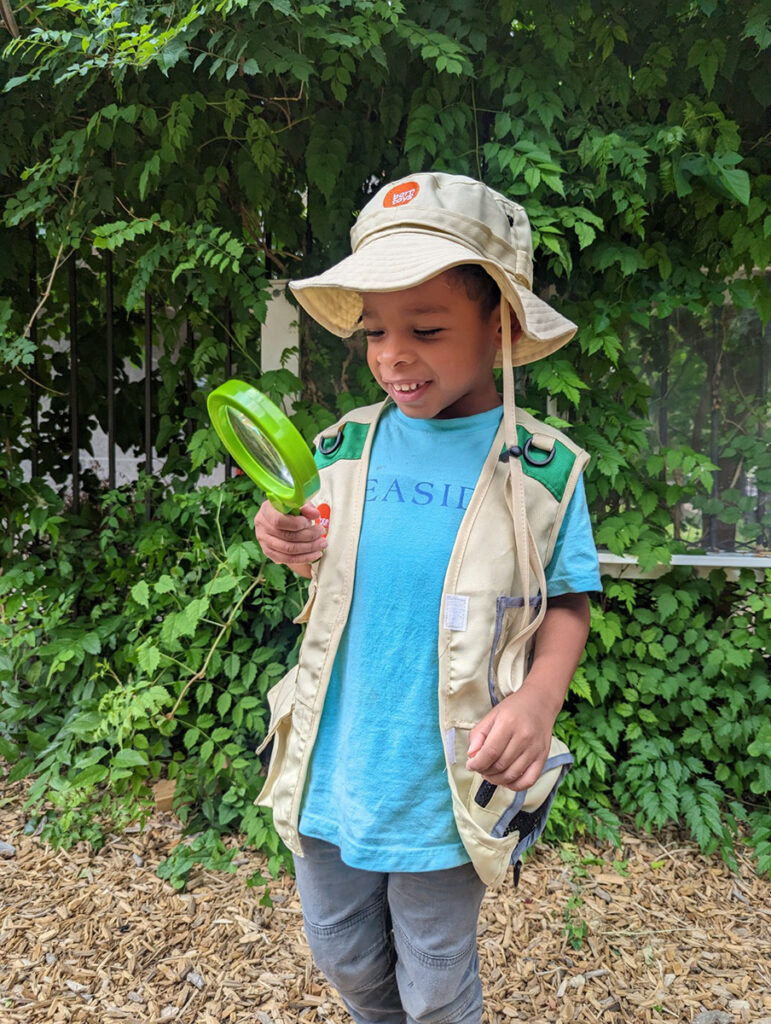
  • Garden Areas and Greenhouse (coming in August 2024) – improves early science and math skills including observing and organizing information, develops patience, and encourages curiosity

Thanks to Nature Explore and the hard work of our school family, All Saints’ students are learning, both indoors and outdoors, to have “Minds that think, hearts that love, and hands that help.”

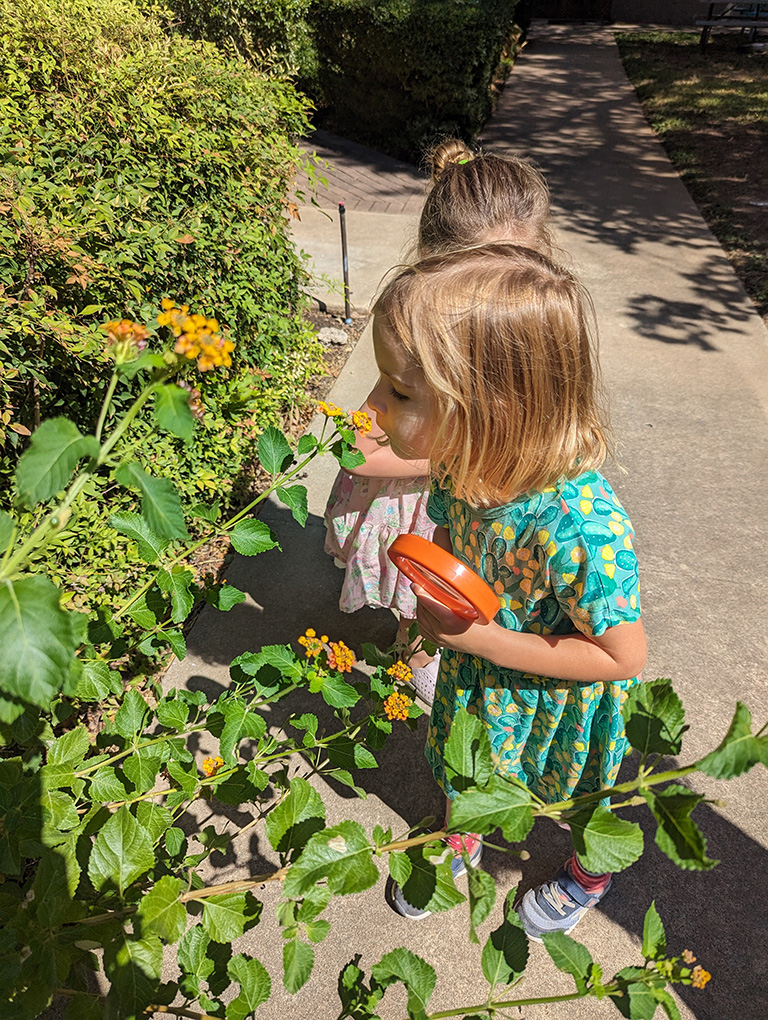
They are happier and healthier, feel a sense of belonging and connection to others, and develop a love of nature, because of the wonderful opportunities and experiences provided by the Outdoor Classroom. On a typical day, you can observe children deeply engaged and working cooperatively to dig in the sand and make volcanoes and rivers, building rocket ships and castles, singing and dancing on the stage, observing snails and butterflies, and excitedly raking, sweeping, and watering the garden.

Want to learn more Nature Explore? Check out their website here:
https://natureexplore.org
and find our listing as a certified Nature Explore classroom here:
https://certified.natureexplore.org/all-saints-episcopal-day-school/

2024 Spring Newsletter

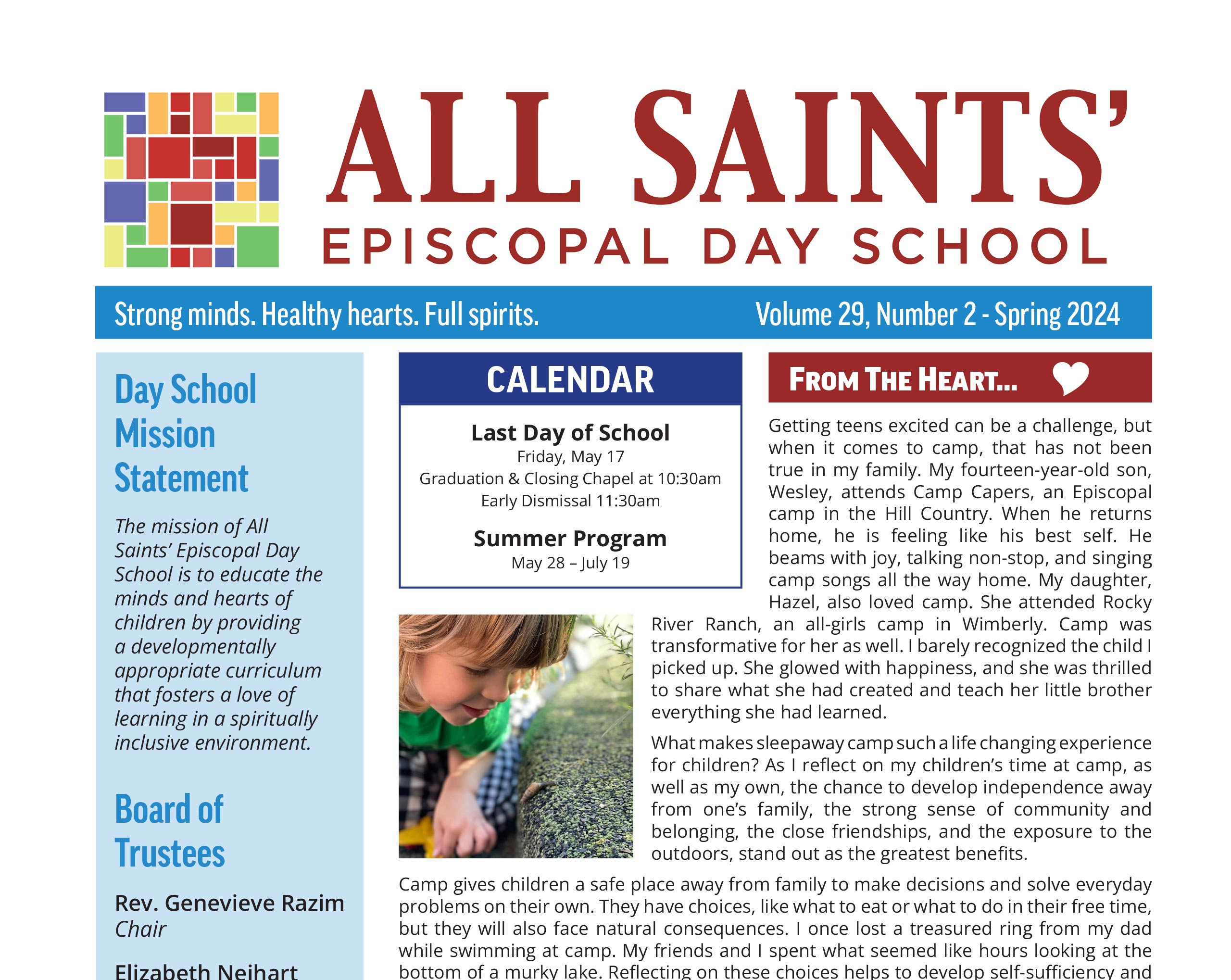
Getting teens excited can be a challenge, but when it comes to camp, that has not been true in my family. My fourteen-year-old son, Wesley, attends Camp Capers, an Episcopal camp in the Hill Country. When he returns home, he is feeling like his best self. He beams with joy, talking non-stop, and singing camp songs all the way home. My daughter, Hazel, also loved camp. She attended Rocky
River Ranch, an all-girls camp in Wimberly. Camp was transformative for her as well. I barely recognized the child I picked up. She glowed with happiness, and she was thrilled to share what she had created and teach her little brother everything she had learned.

What makes sleepaway camp such a life changing experience for children? As I reflect on my children’s time at camp, as well as my own, the chance to develop independence away from one’s family, the strong sense of community and belonging, the close friendships, and the exposure to the outdoors, stand out as the greatest benefits.

Camp gives children a safe place away from family to make decisions and solve everyday problems on their own. They have choices, like what to eat or what to do in their free time, but they will also face natural consequences. I once lost a treasured ring from my dad while swimming at camp. My friends and I spent what seemed like hours looking at the bottom of a murky lake. Reflecting on these choices helps to develop self-sufficiency and an internal sense of responsibility.

The formation of new friendships and developing a sense of community is encouraged at camp. Being in a cabin, as well as team building activities likes ropes courses, daily sing alongs, group games, and other opportunities to be silly and have fun, help children understand that they belong to something bigger than themselves. For my children, taking a break from technology also put the focus on connecting with others.

The biggest benefit in my mind as an educator is the time in nature. Spending time outdoors has been linked to numerous physical and mental health benefits. Research has shown it improves mood and self-esteem while decreasing feelings of stress and anxiety. A sense of wonder and curiosity for the natural world are developed by exploring nature. In my life, these camp experiences have led to a lifelong love of being outdoors, as well as a dedication to being a good steward of nature.

All Saint’s students may be too young for overnight camp, but these are some of the same goals that we have for children. In the classroom, and on our playground, or “outdoor classroom”, we work to help children become independent, feel belonging and connection to others, and develop a love of nature. When I see children deeply engaged and working cooperatively to dig in the sand box to make volcanoes and rivers, encouraging each other to observe snails and butterflies, and excited to water our gardens, I know we are succeeding. My prayer for all of us is that we recognize the power of God’s creation to help us reflect and connect more deeply with ourselves and others. May we inspire the next generation to unplug, go into nature to find joy, and be great stewards of this beautiful Earth.

Gigi Khalsa, Head of School

2023 Fall Newsletter

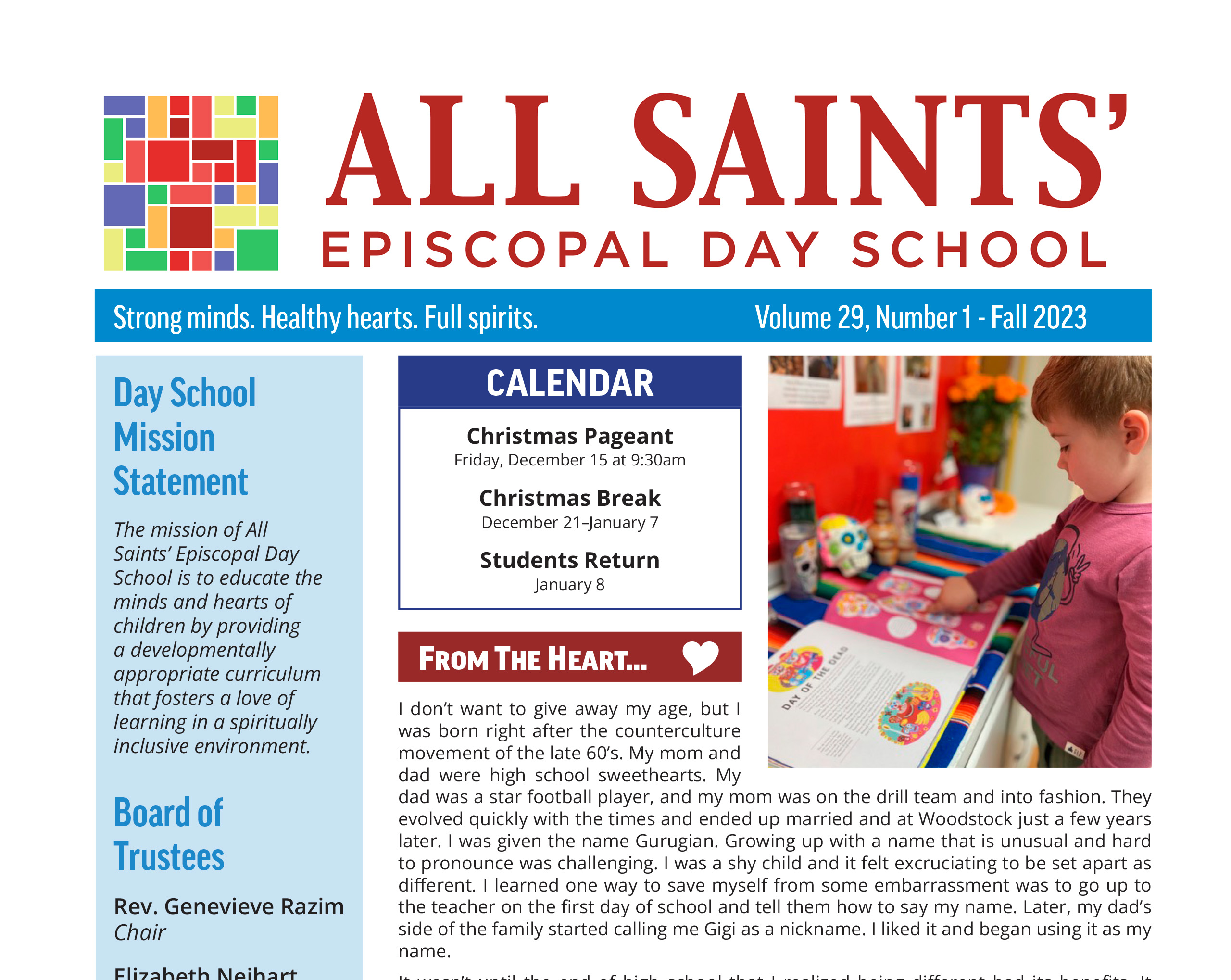
I don’t want to give away my age, but I was born right after the counterculture movement of the late 60’s. My mom and dad were high school sweethearts. My dad was a star football player, and my mom was on the drill team and into fashion. They evolved quickly with the times and ended up married and at Woodstock just a few years later. I was given the name Gurugian. Growing up with a name that is unusual and hard to pronounce was challenging. I was a shy child and it felt excruciating to be set apart as different. I learned one way to save myself from some embarrassment was to go up to the teacher on the first day of school and tell them how to say my name. Later, my dad’s side of the family started calling me Gigi as a nickname. I liked it and began using it as my name.

It wasn’t until the end of high school that I realized being different had its benefits. It shaped me into who I am. It gave me perspective on what it feels like to not fit into society’s norms. In college, telling the story of my name felt like a badge of honor. When people asked what Gurugian means, I would proudly say, “teacher of wisdom”. The meaning of my name became even more significant to me when I took a work-study teaching position, in the campus childcare center, that led to thirty-four years in early childhood education.

My career and personal experience helped me to understand the importance of all children feeling seen and heard. No child should feel excluded because their experience isn’t recognized by their community. Every person’s story should be honored. I believe God brought me to All Saints’ to continue my growth and live my life’s purpose in service to others. In the early part of my seventeen years at the School, it became a home, and the people a family, to me. The message we share with the children that God loves you, love yourself, and love your neighbor resonates deeply with me. With the baptismal covenant I vowed that with God’s help I would strive for peace and justice for all people and respect the dignity of every human being.

In the book, Dignity: Seven Strategies for Creating Authentic Community, Beth-Sarah Wright talks about the importance of learning each other’s stories, and that recognizing our commonalities is a human imperative, not just a moral or religious imperative. She writes that we must choose courage over comfort and recognize our human capacity for growth and new understanding. My prayer for our school family is that we will learn new ways of being together that nurture a diverse and inclusive community where all children and adults feel engaged, confident, and empowered to be fully themselves and share their stories.

Gigi Khalsa, Head of School

2023 Spring Newsletter

My daughter, Hazel, is graduating from high school. Where does the time go? It seems like yesterday that she was a student at All Saints’. My memory of her graduation from the Orange Room is one that lives on in my heart and mind. From the sound of her ringing the church bell to singing “I Am a Promise” with her class- mates, then as now, there were feelings of overwhelming joy and sadness.

A children’s book called The Blur describes this feeling perfectly. The child is born, and the sleepless early days are a blur. At moments, like when the parents are watching the child sleeping, time stands still. Then the blur returns as the child starts walking and exploring everything. Time stops again when the child falls off her bike and later, at graduation. The book ends with the crying parents hugging their now grown crying child as she leaves for college, accompanied by the words, “How did we get here so fast? It’s all a blur.”

Another description of parenting that resonates with me is “Long days, short years”. The days can be long with the work and care required to raise your children, but the years go by fast. Before you know it, they are grown. At momentous moments, we are proud of our children for reaching a milestone, but it can also be stressful. If we recognize this natural inclination to resist change, we can find healthy ways to deal with the inevitable transitions instead of fighting them. As I reflect on how to nurture those memorable moments during the first 18 years of being a parent, here are some of the things I’ve learned.

Hug and hold your child as often as possible. We all have a biological need for touch, and it helps ensure your child feels loved and connected to you.

Strive to be conscious and consistent, not perfect. Your child needs to see you face challenges and get through them in a calm and loving way. When we make mistakes and haven’t behaved the way we would have liked, repair your relationship with your child and let them know you are working on doing it differently.

Don’t compare your family to others. Most of what we see is just the outside shell, the social media images, and appearances. Theodore Roosevelt said, “Comparison is the thief of joy.” Instead, be present and focus on gratitude.

Remember, “This too shall pass.” Children go through many stages and will have challenges. Some of these may be very hard and even heart breaking. You may feel like it is more than you can bear, but getting through my children’s struggles, and getting them outside help when needed, has made us all stronger and more resilient.

Cultivate joy and creativity. Play with them, laugh and be silly, dance and sing, explore nature, make art, and when it’s all done, rest. These are moments you will cherish.

My prayer for all of us is that we learn to live in the moment and love ourselves and others the way God intends us to. Forgiving ourselves by accepting our own flaws and our children’s, and knowing that we are enough, helps our children to have the courage and compassion to get through the challenges of life. Slow down and enjoy the moments so it doesn’t all become “a blur”.

Gigi Khalsa,
Head of School

Diversity, Equity and Inclusion

The All Saints Episcopal Day School Board of Trustees recently formed an ad hoc committee focused on Diversity, Equity and Inclusion (DEI).

The ASEDS DEI Committee exists to advance the values of social justice, equity, and inclusion at our school. The Committee understands the following functions and actions as critical to supporting this mission:

  • Reviewing and structuring our admissions process with the aspiration toward a membership that is proportionately demographically representative of Austin with respect to race, class, gender, sexual orientation, and disability
  • Ensuring that ASEDS community culture is welcoming and as safe as possible to current and prospective members of marginalized groups, and that all community members feel fully part of creating and shaping the culture
  • Supporting ASEDS kids, parents, and teachers to be able to function with sensitivity and skill around issues of diversity, equity, and inclusion
  • Working with the Board and Head of School to ensure these values are actively incorporated across the school, not only within the Diversity Committee meetings or specific recommendations.

Diversity substantially enriches the experience of our entire community. Through our diversity, equity, and inclusion efforts, we seek to create and sustain a school culture that advances the dignity and well-being of each person and promotes a genuine sense of belonging for all. By affirming our similarities and celebrating our differences, our students learn to use their voices and actions to lead with open hearts and minds, creating an environment of empathy, inclusivity, and respect.

For more information on this committee, including upcoming meeting schedule, please contact Anissa Ryland at ajryland@yahoo.com.

2022 Fall Newsletter

When I look back at my favorite family memories, nature’s soothing effects are often involved. My newborn daughter’s crying in the evenings turned to calm when we walked outside. My toddler son’s delight as he creatively piled leaves on the very patient cat who lived next door. Both kids dancing and singing in the rain. Overnight camping where the bickering stopped, and everyone was happy and entertained without the use of screens. Trips to the river where joyous hours slipped by while tubing, swimming, and observing frogs, birds, and fish.

The latest educational research shows the benefits of outdoor learning for all children. When children play outside, they learn about STEM (science, technology, engineering, and math), develop social skills, create healthy habits of being physically active, reduce the risk of mental illness, sleep better, and experience hands-on learning in the real world. Time outside leads to both better learning outcomes and better behavior. Being outdoors lets kids burn extra energy, increases blood flow to the brain and decreases stress. When they come inside, children are more attentive, focused, and on task. As an Episcopal school, we see an additional spiritual benefit knowing that we are all a part of God’s Creation and loved by God. Not only do we learn to love and take care of the earth by spending time in nature, but it also leads us to understand something greater than ourselves and develop a deeper connection to God.

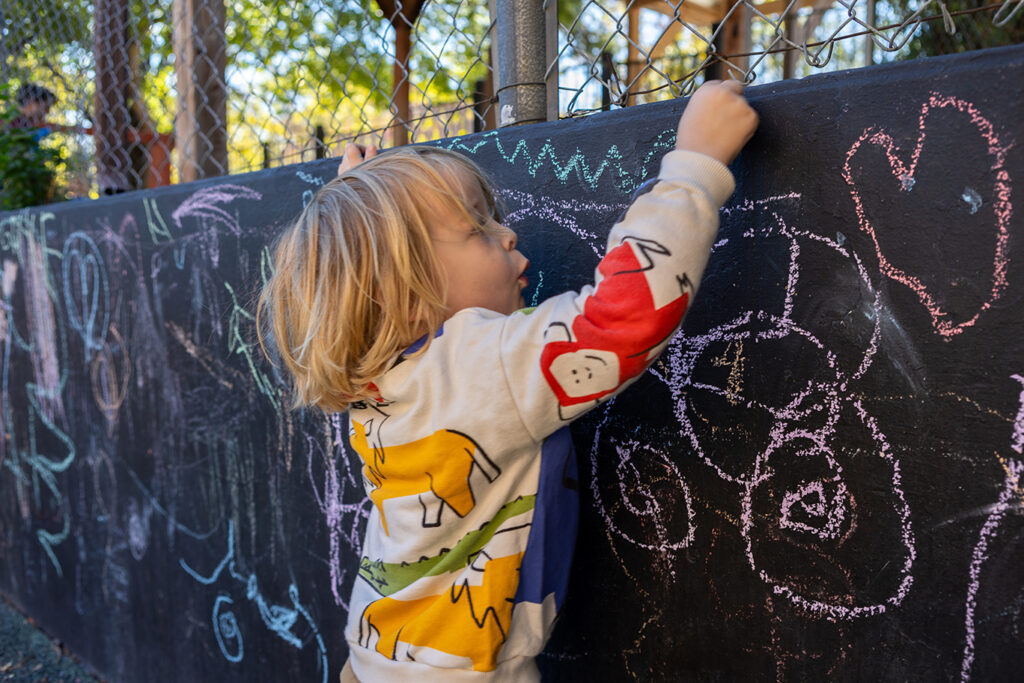
At All Saints’, we know that outdoor play is essential to the healthy development of body, mind, and spirit. The playground design has been improved to maximize the benefits of an outdoor classroom. There are more than the recommended eight different play areas, and indoor toys have been brought outside to encourage whole-child natural learning. We have a quiet area with books, large and small wooden blocks and giant Legos for STEM exploration, a play tent, sand kitchen, a dramatic play area with a large mirror, a fairy and butterfly garden, vegetable, flower and herb gardens, a music wall, outdoor easels, chalk wall, and of course, the classic and ever popular swings, a climbing structure, monkey bars, and a slide.

So how much time do young children need outdoors? Toddlers should be outside at least 60 minutes a day and preschool children at least 90 minutes a day. Some experts recommend that children spend three hours outdoors every day. Consider adding some new activities to your family’s routine including scavenger hunts, leaf rubbings, digging in the dirt, planting, obstacle courses, games, playing in the rain, doing art outside, taking photos or videos of discoveries or experiments, or starting a collection. You may find that like my own children, and the students at All Saints’, your child is happier, healthier, and more independent and engaged when they are in nature. My prayer is that we all find outdoor activities that make family life more fun, help children become lifelong learners, and encourage connection with God and nature.

Gigi Khalsa,
Head of School
2022 Spring Newsletter

As parents, we have the natural desire to protect our children. When they are babies and they cry, we pick them up and soothe them, telling them everything will be OK. As they get older, we may try to distract them with a favorite toy or fix their problem, so they feel better. Although these are natural parental urges, they may not help children learn to be resilient by accepting and moving through big feelings. Anger and sadness are part of life and learning to handle upset, helps us to be emotionally healthy and find more joy in life.

Last year, my son announced that the pandemic had “ruined his life.” He did not enjoy learning online and found it difficult to stay focused during Zoom lessons. His grades dropped dramatically, and he missed his friends. After weighing the risks and benefits, he finished Fifth grade in person. When he got into a magnet program for middle school, we hoped he would go back to thriving at school. Instead, his middle school experience has been a roller coaster ride of friendships, hormones, inclusion/exclusion, online bullying, and learning personal responsibility. There have been lots of tears and big emotions. Any parent would feel deeply for a child that was going through painful emotions, but on top of that, I have been struggling with the grief of losing my father and grandparents.

In an article by Katie McLaughlin, she uses a tunnel analogy to talk about parenting when children are having big feelings. The analogy resonated with me both in terms of my own feelings and what my son is going through. She writes, “Difficult feelings are tunnels, and we are trains traveling through them. We have to move all the way through the darkness to get to the…calm peaceful light at the end.” Where we go wrong as well-meaning parents is trying to talk our children out of their feelings, rescue them, or discount their emotions by saying everything will be OK. Of course, it hurts us to see our children in pain, but we are missing out on teaching them to be resilient. The voice we use with them becomes their inner voice as they grow into adulthood.

McLaughlin talks about how as adults we don’t always move all the way through the “tunnel.” We try to hide by saying everything is fine when it isn’t, or we use distractions like food, shopping, and alcohol. When we can accept and release our feelings, we feel better. I want to help myself and my son move through our “tunnels.” I commit to remembering that expressing big feelings is not a sign of failure but instead of success. When I allow myself to feel, I can handle the discomfort of my child’s big feelings. I can empathize and allow life’s natural consequences and lessons to take place while supporting my child through the emotional tunnel.

My prayer for all of us is that we will recognize that emotions pass, and big feelings are a part of life, helping us to heal, and become more resilient. Instead of distracting our children or rescuing them from their feelings, we can help by being self-regulated, giving them both a sense of safety and being heard and seen, as they move through the tunnel.

Gigi Khalsa ,
Head

OPEN THE SPRING NEWSLETTER